
Key Takeaways
- GDNF and BDNF upregulation — Ibogaine may signal the brain to produce growth factors that promote neuronal repair and survival
- Beyond addiction treatment — Research suggests applications for traumatic brain injury, Parkinson's disease, and age-related cognitive decline
- Cellular regeneration, not symptom masking — The medicine may work at the level of brain repair, not just neurochemical rebalancing
- Rigorous screening required — Cardiac and psychological assessment are non-negotiable for safe, responsible use
- Lived experience + science — Both clinical research and guest reports point toward genuine neuroprotective capacity
You've likely heard ibogaine called an addiction medicine. The clinical literature speaks to interrupting cycles of dependence with remarkable success rates. But if that's all ibogaine was, the story would end there. Instead, something unexpected is emerging from labs and field reports: this medicine appears to do something far more fundamental. It may be teaching the brain itself how to heal.
Not the kind of healing we talk about casually. Real cellular rewiring. The growth of new neural connections. The activation of proteins that literally repair damage at the molecular level. The science is young, yet it's compelling enough that researchers, athletes, and military veterans are asking the same question: What if ibogaine isn't just for addiction? What if it's medicine for the brain itself?
What Does "Neuroregeneration" Actually Mean?
Let's start with the basics. For decades, neuroscience taught us something that's now recognized as incomplete: the adult brain can't grow new neurons or repair damage. It was set at birth, then slowly declined. We know better now.
Neuroregeneration is the brain's capacity to rebuild itself. It happens through several mechanisms:
- Neurogenesis — Literally creating new neurons in regions like the hippocampus
- Neuroplasticity — Rewiring existing connections and forming new pathways
- Myelination — Strengthening the insulation around neural fibers for faster signal transmission
Think of it as the brain's repair crew suddenly getting the tools and permission to get back to work.
Most of us have heard of neuroplasticity—the brain's ability to learn and adapt. That's real, and important. But neuroregeneration goes deeper. It's not just new learning; it's cellular repair. It's damaged tissue finding its way back to function. It's brain chemistry rebalancing at the molecular level.
GDNF and BDNF: The Growth Factors That Drive Healing
If neuroregeneration is the goal, GDNF and BDNF are two of the most important players in making it happen. Think of them as the brain's repair hormones.
GDNF (glial cell line-derived neurotrophic factor) and BDNF (brain-derived neurotrophic factor) are growth factors—proteins that act like growth hormones for the brain. They signal neurons to:
Survive under stress
Grow new connections
Form synapses with neighboring cells
Resist inflammation and cellular damage
Without sufficient GDNF and BDNF, the brain struggles. Dopamine neurons (the kind that suffer in Parkinson's disease) are especially dependent on GDNF. Traumatic brain injury, repetitive impacts, and neuroinflammation all deplete these factors.
| Growth Factor | Primary Role | Affected Conditions | Ibogaine Effect |
|---|---|---|---|
| GDNF | Dopamine neuron survival; motor control | Parkinson's, TBI, motor cortex damage | Research suggests upregulation |
| BDNF | Learning, memory, neuroplasticity | Cognitive decline, depression, aging | May support elevated levels |
| General Growth Signaling | Inflammatory response management | Chronic neuroinflammation, MS | Potential neuroprotective modulation |
What makes ibogaine interesting is that research suggests it may upregulate these factors—essentially telling the brain "You have permission to repair yourself." Studies in animal models show elevated GDNF and BDNF levels after ibogaine treatment. This isn't hype. This is measurable biology.
The Research That Changed the Conversation
For years, ibogaine research happened at the margins. Small labs. Underground networks. Anecdotal reports from people who found their way to South Africa and came back transformed.
Then, in the early 2020s, Dr. Nolan Williams at Stanford began the first rigorous clinical work on ibogaine and the brain. Williams and his team looked past addiction and straight at the underlying neurophysiology: Can this medicine heal trauma? Can it repair TBI? Can it address the brain inflammation that underlies so many conditions we've learned to think of as untreatable?
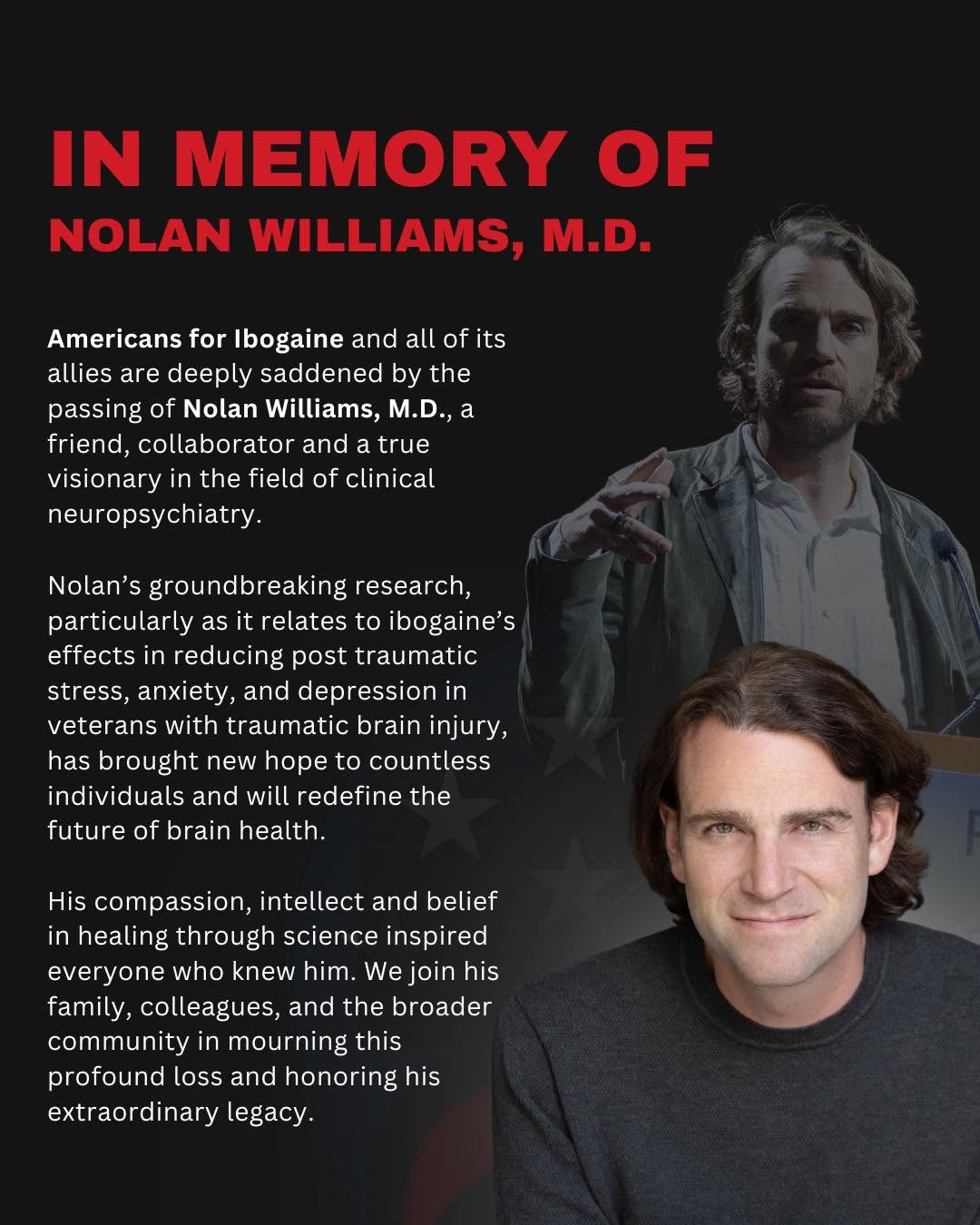
— Eyeboga Research Summary"Williams' work was rigorous, peer-reviewed, and published in respected journals. It wasn't about hype. It was about asking: What is this medicine actually doing to the brain? His research opened doors."
Suddenly, ibogaine wasn't just something people whispered about. It was something you could study in a major academic institution. The science was no longer underground—it was mainstream neuroscience asking mainstream questions.
From Athletes to Veterans: A New Picture Emerges
Once you start looking, the pattern becomes clear. The people drawn to the medicine aren't just those struggling with addiction. They're:
Athletes with repeated concussions
Soldiers with traumatic brain injuries
Early-stage Parkinson's participants seeking regenerative approaches
Aging adults experiencing cognitive fog
People whose brains have been damaged not by drugs, but by life—by impacts, by stress, by inflammation
Consider Brett Favre. The NFL legend, known for his resilience on the field, carried decades of head impacts. When he started experiencing symptoms consistent with both TBI and Parkinson's—cognitive fog, motor slowing, mood changes—he explored ibogaine. Not as a cure. Not as a promise. But as the medicine that research suggested might support the brain's own healing capacity.

Military veterans see something similar. For years, they were offered medications that mask symptoms—SSRIs for depression, stimulants for fatigue, sleep aids that leave you groggy. But underneath, the brain injury remains. Some guests report that ibogaine works differently. Not masking. Regenerating.
The Shift: From Addiction Medicine to Brain Medicine
This distinction matters deeply. For the past 30 years, ibogaine has lived in the world of addiction treatment. Clinics in Mexico. Research centers quietly operating in the Netherlands. The primary narrative: Ibogaine interrupts opioid dependence.
That's true. And it matters. But it's also created a ceiling on how ibogaine is understood—a narrative that constrains the medicine to a single application.
— Neuroscience-centered perspectiveWhen you look at ibogaine not through the lens of addiction, but through the lens of neurobiology, you see something different entirely.
You see a medicine that:
- Increases GDNF signaling — Supporting dopamine neuron survival
- Promotes BDNF upregulation — Enhancing learning and neural plasticity
- May reduce neuroinflammation — Quieting the cascade of immune damage
- Research suggests may support neurogenesis and neuroplasticity
In this framing, addiction treatment becomes one application of a much broader capacity. The medicine doesn't just help guests stop using drugs. It helps brains heal. And brains need healing for many reasons—trauma, age, damage, inflammation.
Why This Matters for Aging, Injury, and Neurodegeneration
Here's the hard truth: as we age, our bodies produce less GDNF and BDNF. It's biology. Our brains get less signaling to repair, less encouragement to grow. This underlies much of what we call normal aging—cognitive slowing, reduced neuroplasticity, increased vulnerability to neurodegenerative disease.
Traumatic brain injury (whether from falls, car accidents, or sports) damages tissue directly and triggers neuroinflammation—a cascade of immune signaling that, if not resolved, can last years. Most standard treatments address symptoms, not the underlying regeneration.
Parkinson's disease involves loss of dopamine neurons that depend on GDNF for survival. There is no cure. Medication manages symptoms but doesn't restore the cells. Research suggests that ibogaine may support the conditions under which those cells can stabilize or even recover function.
Important Distinction
None of this is to say ibogaine is a cure. Research suggests it may support neuroregeneration. Some guests report recovery. Others report improvement. The science is real; the claims must be honest. Always work with experienced practitioners and maintain realistic expectations.
Safety and Medical Screening: Non-Negotiable
Here's where we get grounded. Ibogaine works on multiple neurochemical systems. It's powerful. And power, in medicine, always comes with risk.
Cardiac Screening is Non-Negotiable
Ibogaine affects QT interval—the electrical rhythm of your heart. It can trigger arrhythmias in people with certain conditions. Full cardiac evaluation—EKG, sometimes echocardiogram—is the standard of care at responsible clinics. This isn't optional. This is essential medical screening.
Psychological screening matters equally. Ibogaine is a profound medicine. It works at the neurological level, but it also opens psychological space. Guests with:
Active psychosis
Unmanaged bipolar disorder
Severe dissociation
Recent trauma without integration support
...may need modified approaches or additional psychological support. Pre-treatment assessment isn't gatekeeping. It's respect for what the medicine actually does.
The Clinic Context Matters
Working with experienced clinicians in regulated settings—like those in South Africa where ibogaine is legal—changes the equation. Not because the medicine is different, but because the context is.
- Proper screening
- Proper integration
- Proper medical support
- Experienced integration therapists
This infrastructure is what transforms the medicine from experimental into genuinely supportive.
The Medicine Speaks Its Own Language
In the end, the science matters. GDNF matters. BDNF matters. Stanford research matters. The mechanisms matter. This is how we move from anecdote to understanding.
But so does the lived experience. Guests walk into clinics with:
Decades of cognitive fog and report clarity
Conversations they couldn't remember and report their memory returning
Treatment-resistant PTSD symptoms and report stability
These aren't placebo effects. These are people. Real recovery.
The conversation is shifting—from Does ibogaine work for addiction? to What is this medicine actually capable of? The science is following. Not as hype, but as rigorous inquiry. And what it's finding is that the brain—even a damaged brain, an aging brain, an exhausted brain—has far more capacity to repair itself than we were taught. Sometimes it just needs the right signal. Sometimes it needs the medicine.