Key Takeaways
- South Africa is the only legal jurisdiction for ibogaine retreats operating above ground
- Cost matters: $3,200–$4,700 vs. $15,000–$25,000 elsewhere—not from lower quality, but aligned incentives
- The team is everything: depth of experience (20+ years), indigenous lineage, somatic integration, paramedic medical oversight
- Landscape as medicine: The African setting isn't backdrop; it's active in the healing
- The window is closing: As ibogaine goes mainstream, true integrity gets harder to find
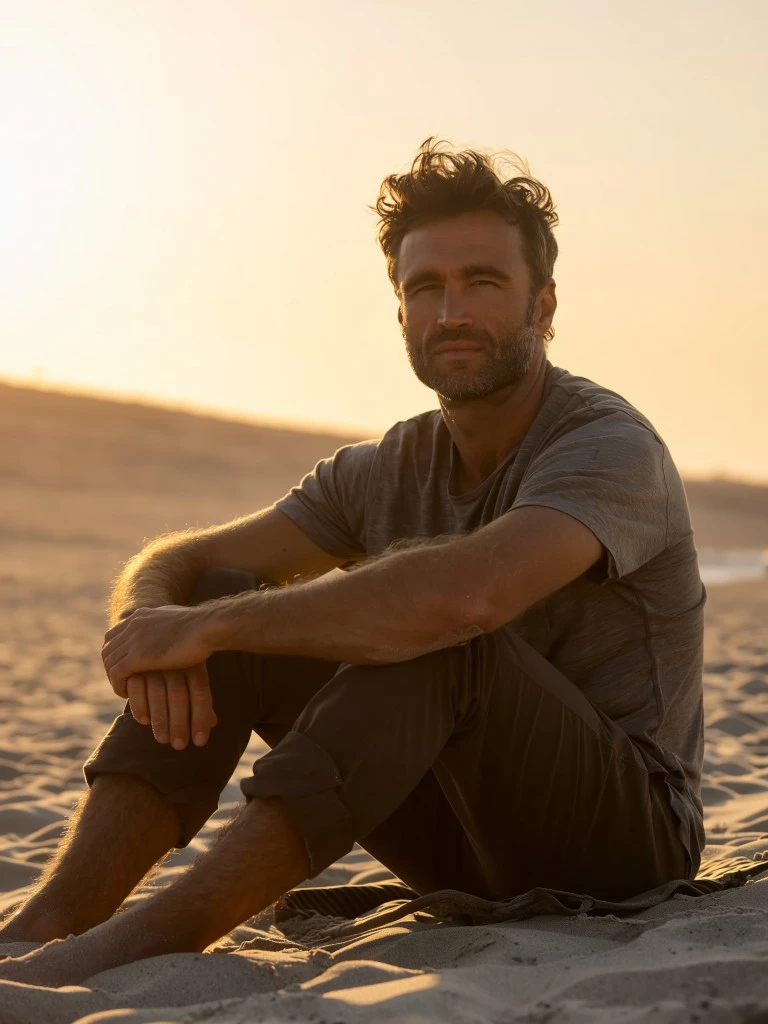
I'm a software engineer. I build systems, model problems, optimize for scale. For fifteen years, I've lived in that world — code as clarity, data as truth. If you'd told me five years ago that I'd end up founding a company to connect people with the medicine in South Africa, I would've laughed.
But last month, sitting in a valley in the Langeberg Mountains near Swellendam, watching the light change across the peaks, I understood why this place—and only this place—could be home to what I'm building.
The Search
Like a lot of people I know, I was searching. Not for a drug. For a path. For something that felt true when everything else felt like optimization—career, fitness, relationships, all of it suddenly visible as a spreadsheet I'd been trying to solve for the wrong variables.
I'd read about ibogaine. The research was compelling. A single dose, proper containment, genuine integration work afterward. Not a recreational thing. Not escape. The opposite of escape—forced, total confrontation with what you've been running from.
But I was skeptical. Of the process, of the claims, of whether a tech person like me could sit still long enough for it to matter. I found myself researching retreat options the way I'd evaluate cloud infrastructure: cost, reputation, medical credentials, amenities.
Mexico had options. Costa Rica. There's a whole circuit. Expensive. Professional. A little corporate. And then, almost by accident, I found Exclusive Ibogaine Retreat. Not in a polished marketing deck. In an Instagram post from someone I didn't know, showing the Langeberg Mountains, a small team, a name: Anita Viviers.
Why South Africa: Legal Status, Economics & The Real Reason
Here's what most people don't know: ibogaine is legal and unscheduled in South Africa. Not tolerated. Legal. That changes everything.
It means Anita and her team didn't have to be secretive or apologetic. It meant they could be rigorous. They could invite paramedics with real credentials—John Reinecke and Heindrich Roets, combined 19+ years and 80,000+ clinical hours—to be there, not hidden away. It meant the work could be serious without being covert.
| Dimension | South Africa | Mexico | Costa Rica |
|---|---|---|---|
| Legal Status | ✓ Unscheduled, legal | ⚠️ Gray area, underground | ⚠️ Gray area, underground |
| Cost per Retreat | $3,200–$4,700 | $15,000–$25,000 | $12,000–$22,000 |
| Medical Oversight | Paramedics on-site (19K+ hours) | Variable, often limited | Variable, often limited |
| Indigenous Integration | Deep (Iqgirha tradition) | Limited | Limited |
| Team Continuity | 20+ years, same practitioners | High turnover in circuit | High turnover in circuit |
| Setting Authenticity | Raw African landscape | Resort-curated | Resort-curated |
The economics were different too. A retreat that in Mexico or Costa Rica costs $15,000 to $25,000 runs $3,200 to $4,700 in South Africa. Not because the quality was lower. Because the country isn't pricing based on wealthy North American demand. The math is different. The incentives are aligned differently.
But the real reason has nothing to do with law or money.
It's Anita.
Meeting Anita: The Foundation
Anita Viviers has been working with plant medicine for over 20 years. She's certified by the African National Healers Association. But the credentials, when she mentioned them, felt like an aside. What mattered was her presence.
Warm. Grounded. Maternal without being patronizing. She looked at me—a skeptical tech guy showing up from Cape Town, jet-lagged and armored—and saw what I was actually carrying. Not what I was pretending to carry.
— Anita Viviers, Exclusive Ibogaine RetreatThe medicine will meet you exactly where you are. Your job is to get out of the way.
That's not something you read in a brochure. That's someone who has sat with hundreds of people through this work and understands the paradox: you can't control healing, but you can create the conditions for it. That distinction—containment vs. control—is everything.
The Team: Why Depth Beats Scale
This is where I need to be specific, because the difference between a retreat and a truly good retreat is the people.
Anita brought together what felt less like a clinical staff and more like a family of practitioners. Not because they're unprofessional—because they're past that. They've built something grounded.
- Nicci Jacobs — 30+ years in holistic healing, Reiki Master; the container-holder
- Zenta Malan — somatic integration and psilocybin facilitation; body intelligence
- Lotta Nilsson — vegetarian cooking, Kahuna massage; nourishment and touch
- Susan Rossetto — morning yoga and sound baths; nervous system regulation
- Kent Steenekamp — traditional healer, Iqgirha; carries indigenous South African lineage
- Anders Beatty — 25 years lived experience with addiction; UK-based, works with top facilities; speaks from the bone, not theory
And that's the core. What they actually deliver:
- Three days of preparation — grounding, medical screening, intention-setting
- The flood dose — under constant medical supervision (IV hydration, cardiac monitoring, trained for complications)
- 24-hour technology detox — forced presence, no escape hatch
- Vegetarian meals — clean fuel, mindfully prepared by Lotta
- Yoga and sound baths — somatic support for integration
- Letter-burning ceremony — the final night, release work
- Journaling space — excavating what surfaces
- Integration sessions — with Anders, the real work; where healing becomes durable
The Landscape: A Witness, Not a Backdrop
I underestimated how much the place itself would matter.
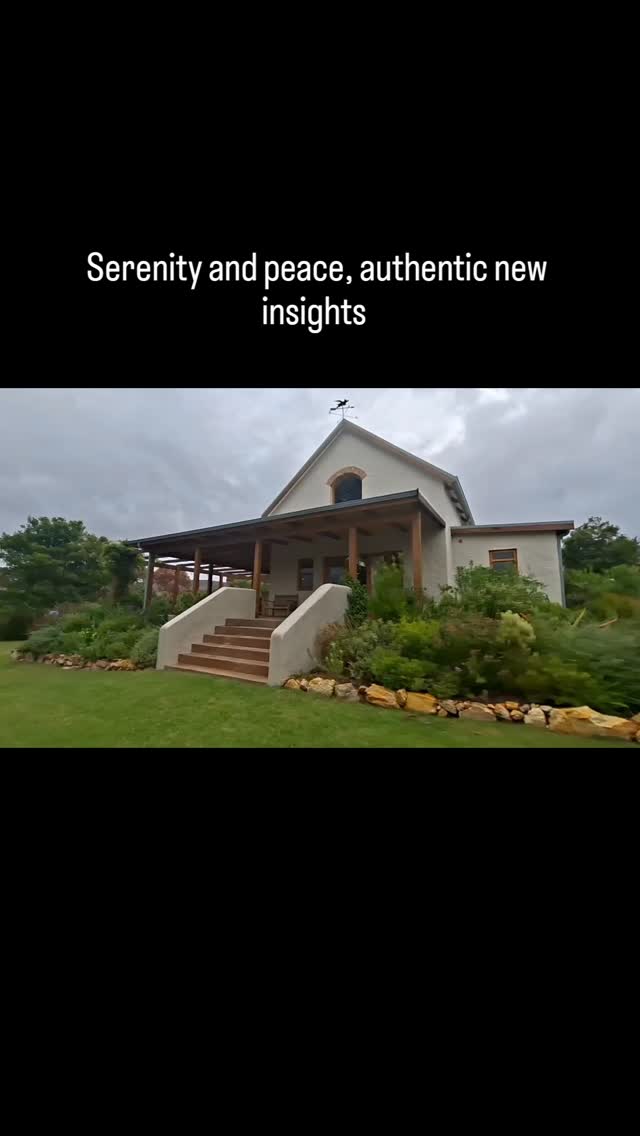
The Langeberg Mountains. A secluded valley. Lush forests. Waterfalls you can hear at night. Fresh water pools. Horses moving slowly through the grounds. Not curated Instagram nature. Real landscape. The kind that doesn't care what you're carrying or what you're afraid of—it just is.
During the integration days, I sat alone on the mountainside and realized something crucial: I couldn't have done this work in a Mexico resort, no matter how nice. I couldn't have done it in Costa Rica, no matter the medical team. The African landscape—the realness of it, the way it holds both beauty and indifference—was part of the medicine.
It refuses to let you perform. You can't spiritually bypass in the face of that kind of truth.
— From my journal, day fiveYou can't heal while you're performing. You need a place that doesn't ask you to perform. The Langeberg is that place.
Why This Moment Matters: Research & Legislation Are Shifting
Three weeks before I went to South Africa, Stanford published research in Nature Mental Health on ibogaine's effects in veterans with PTSD. The data is real. The mechanisms are becoming visible.
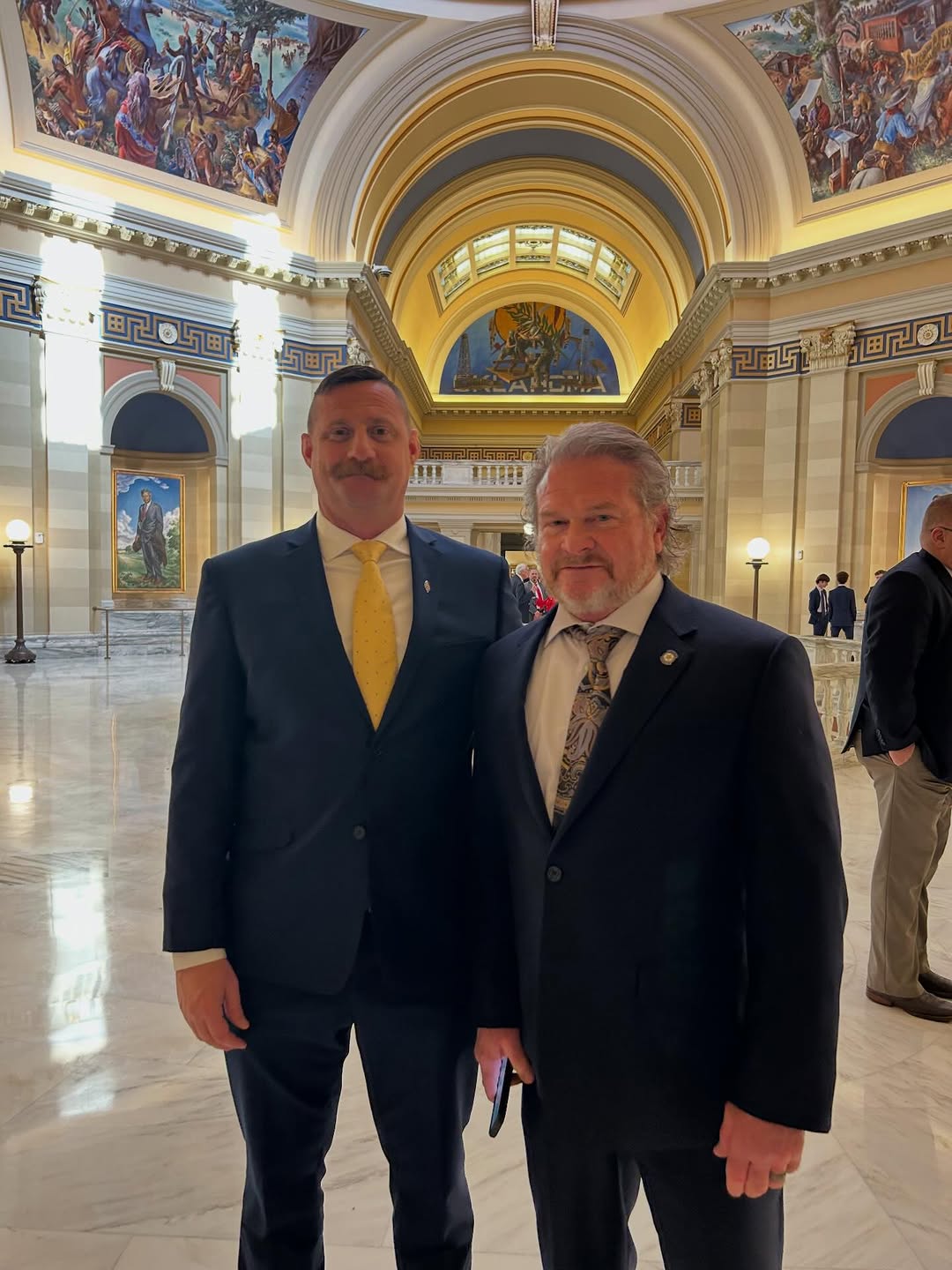
In Oklahoma, the legislature just passed HB 3834—the Breakthrough Therapy Act—which explicitly designates ibogaine as a therapy worthy of expanded access and research funding. Oklahoma. Not California. Oklahoma. The conversation is shifting from 'addiction medicine' to 'brain medicine.' From marginalized to mainstream.
And here's what I noticed: there's almost no ibogaine content coming from South Africa on Instagram. Nothing. A massive gap. The conversation is dominated by Mexico, Costa Rica, pieces of Europe. But South Africa—where it's legal, where the costs are rational, where there's indigenous healing tradition embedded in the landscape—is barely visible.
That's because it hasn't been industrialized yet. It's still intimate. Still run by practitioners who got there because they genuinely cared, not because there was a market to capture.
That window is closing.
What to Look For in a Retreat
- Legal transparency — Can they operate in daylight? Do they invite medical professionals?
- Team depth — Has anyone been there 10+ years? Or did they join last month?
- Integration focus — What happens after the medicine? That's where real healing lives.
- Cost alignment — If it costs $20K, ask why. Market capture or genuine care?
- Indigenous respect — Does the work honor local tradition, or appropriate it?
Why I'm Building eyeboga: Preserving Integrity Before Capitalism Arrives
That's why I'm building eyeboga.ai. Not to scale up Anita's retreat. Not to optimize it into a commodity. But to connect people who are searching—like I was—with practitioners and places that are actually doing this work with integrity.
There are maybe a dozen places in South Africa doing ibogaine work seriously. Good people. Grounded people. Not trying to get rich off desperation. And most of them are invisible to the people who need them most.
As the legislative landscape shifts, as the research mounts, as more people recognize they need something deeper than therapy-as-usual, they're going to search. They're going to find retreats that promise transformation for $20,000. And they might bypass the place—the team, the landscape—that would actually hold them.
eyeboga is the connective tissue. The place where someone sitting in Seattle or London or São Paulo, carrying the weight of something they can't shake, can find Anita. Can find the Langeberg. Can find a path that feels true because it actually is true.
The Risk: A Window Closing
I'm aware of the risk. As ibogaine becomes visible—as it enters the mainstream, as retreat centers multiply and get venture funding and start operating like wellness startups—the thing that made South Africa special will probably disappear. Market pressure will push toward standardization, scaling, the extraction of value.
Maybe that's inevitable. Maybe I'm just trying to document something beautiful before it gets capitalized.
But for now, in this moment, there's a window. A place where someone like me—a skeptic, an engineer, someone who doesn't believe in woo but desperately needed something real—can sit in a valley in the mountains and actually heal. Can be held by a team that sees him. Can integrate what surfaces without performance, without commodity, without the sickening awareness that he's being processed.
That window won't last forever. But it's open now.
If You're Searching: What to Know
If you're reading this and you recognize yourself in any of this—the search, the skepticism, the sense that something's missing and no standard path is going to find it—I want to say something clearly:
The work is real. The medicine may support healing in ways that research is only now documenting. Some people report profound shifts in how they relate to themselves, their trauma, their addiction patterns, their sense of purpose. But it's not magic. It's not a reset. It's a confrontation. You meet yourself fully, all the parts you've been managing and medicating and optimizing away. And then you get to choose.
Choosing a place to do that matters. Choosing practitioners you can trust, a landscape that holds you, a team that's in it for the right reasons—that's not luxury. That's essential.
About Exclusive Ibogaine Retreat
- Location: Langeberg Mountains, Swellendam, Western Cape
- Lead Facilitator: Anita Viviers (20+ years)
- Medical Team: John Reinecke & Heindrich Roets (19K+ combined clinical hours)
- Cost Range: $3,200–$4,700 (all-inclusive)
- Integration Focus: 7-day program with post-retreat support
- Contact: @exclusiveibogaineretreat (Instagram)
eyeboga.ai can connect you with this team and others like it.
South Africa offers something I couldn't find anywhere else. A legal framework that honors the medicine without sensationalizing it. A cost structure that isn't built on scarcity pricing. A landscape that refuses to let you hide. Practitioners with deep experience and genuine care.
And Anita. Who will meet you exactly where you are and get out of the way so the medicine can do its work.
Interested in learning more? eyeboga.ai connects people with vetted ibogaine and plant medicine practitioners in South Africa. Research is just starting—always consult with medical and mental health professionals, especially if you're on medications. This is not medical advice.